Moscow, Russia
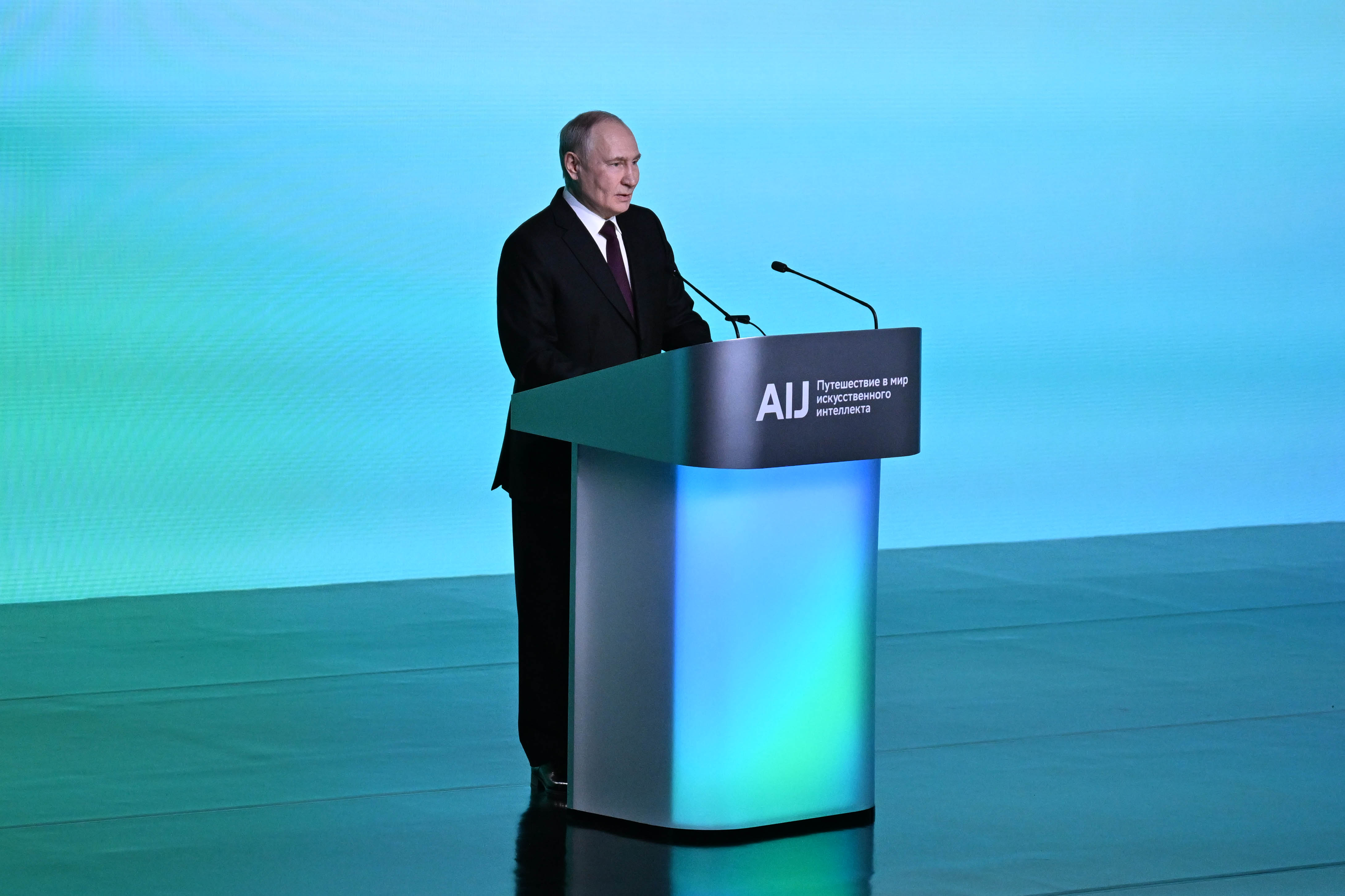
In his speech, the Head of State thanked President Vladimir Putin for the invitation to the forum, which brought together top-level experts in artificial intelligence, and highly commended Russia’s achievements in science and technology.
“Russia has long been renowned and respected for its brilliant scientists and inventors, including in engineering. Here and now, it would be fitting to name such titans of science as Mikhail Lomonosov, Dmitri Mendeleev, Ivan Kulibin, Nikolai Lobachevsky, Andrey Kolmogorov, Alexander Popov, Sergei Korolev, Konstantin Tsiolkovsky, Igor Kurchatov, Pyotr Kapitsa and many others. There probably would not be enough paper or time to name them all. A landmark milestone in the emergence of a new technological paradigm was the creation, under the leadership of Academician Sergei Lebedev, of one of the world’s first electronic computers,” Kassym-Jomart Tokayev noted.
As the President of Kazakhstan emphasized, these distinguished traditions are being worthily continued in modern Russia.
“According to the World Intellectual Property Organization, Russia ranks second in the world in the number of applications for unique designs and models, the significance of which for the development of humanity can hardly be overestimated. The latest technological advances by leading Russian companies, particularly Sber and Yandex, cannot fail to impress any unbiased person interested in the development of high technology. As for Yandex and Sber as well, they have a very broad presence in our market. In fact, Yandex is the largest employer in Kazakhstan. The scale of the Russian’s innovation infrastructure is clearly demonstrated by its recognized flagships as Kurchatov Institute, Skolkovo, Innopolis, Technopolis and many others,” Kassym-Jomart Tokayev said.
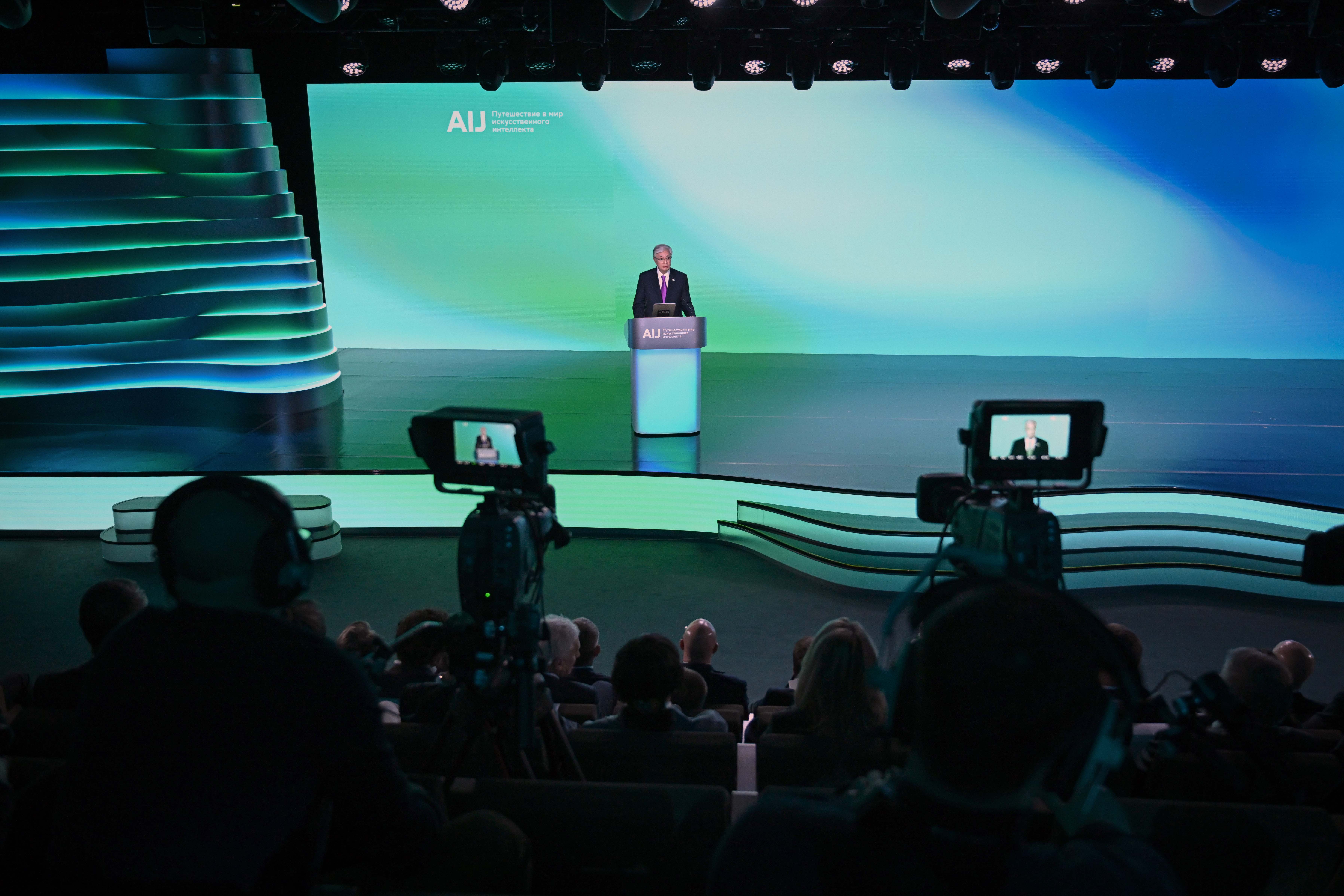
The Head of State noted that the topic of comprehensive digitalization and the introduction of artificial intelligence is particularly close to him, as it has been declared a priority of our reform agenda
“The new Constitution, which entered into force on July 1 this year, designates the development of science and innovation as a strategic direction and proclaims knowledge and progress as fundamental values of the state. That is why we consider this forum important and relevant for Kazakhstan, as evidenced by the composition of our delegation. It includes heads of relevant government agencies, as well as representatives of large businesses and the IT community who are interested in expanding cooperation with Russian partners. Kazakhstan and Russia are bound by centuries-old friendship, a shared history, strong economic relations and diverse humanitarian ties. I am confident that cooperation in advanced technologies will become a key direction of the Kazakh-Russian strategic partnership,” Kassym-Jomart Tokayev said.
The Head of State believes that the world is already on the threshold of a new scientific and industrial revolution, which will inevitably bring about fundamental changes in the global economy and in the very worldview of people and entire nations.
“Artificial intelligence has already gone beyond simply automating individual production and cognitive processes, and has in essence become an integral part of the technological infrastructure. Notably, global spending on artificial intelligence this year may reach approximately 2.7 trillion US dollars, with more than 1.5 trillion US dollars allocated specifically to the development of digital infrastructure. In a Stanford University study, 88 percent of surveyed organizations reported using artificial intelligence in their daily operations. Two years ago, this figure stood at 55 percent. My fairly frequent meetings with the heads of major technology companies confirm the view that the ongoing changes are long-term and, in essence, irreversible. Recently I met Jensen Huang, CEO of NVIDIA, and I have also held meetings with Russian companies,” the President noted.
Kassym-Jomart Tokayev pointed out that the technological transformation is taking place against a backdrop of geopolitical tension and a lack of trust among states.
“We can speak of the emergence of a fundamentally new geotechnological map of the world, in which access to advanced developments, computing power and qualified personnel is becoming a decisive factor in states’ competitiveness and security. Attempts to restrict international scientific interaction and to concentrate critical technologies in the hands of a narrow circle of players of this process risk exacerbating global technological inequality. We consider it extremely important to prevent the emergence of new dividing lines and to ensure appropriate conditions for mutually beneficial scientific and technological cooperation,” the Head of State said.
The President stated that Kazakhstan has set as its strategic goal the transformation of the country into a fully-fledged digital state within a relatively short period of time.
“This year has been declared the Year of Digitalization and Artificial Intelligence. The Digital Qazaqstan National Strategy has been approved, and the Law “On Artificial Intelligence” and the Digital Code have been adopted. Thus, the necessary legal and institutional framework has been established for the dynamic development of the new digital economy. Most importantly, this large-scale project has the support of our community because it brings tangible benefits to citizens and businesses. More than 90 percent of public services have become available online. Almost two-thirds of citizens, 13 million users – are registered in the eGov Mobile app. According to a UN study published a week ago, Kazakhstan ranked 16th in the global E-Government Development Index, rising 8 places in just two years,” the President said.
In addition, Kassym-Jomart Tokayev highlighted Kazakhstan’s well-developed system of electronic financial services.
“Favorable conditions have been created for technology entrepreneurship. Last year, exports of domestic IT services exceeded 1 billion dollars. The Astana Hub technology park, which supports startups and tech companies, is operating successfully. Since 2019, the combined revenue of its participants has reached 7 billion dollars. Astana Hub is now home to 2,700 startups and companies. The first ‘unicorn’ has emerged, and other companies are now following in its footsteps. This ‘unicorn’ is called Higgsfield, and within just one year it has ‘raised’, as they say, 10 billion dollars. The company’s capitalization keeps growing, and it was founded by just two people, two talented young men from Kazakhstan. I have set out and formulated the task of building a ‘people’s digital economy’, in which the Internet will serve people who wish to earn a legitimate income. In other words, the Internet should be a space for creativity and productive work, not a ‘trash bin’, as it is often called.” Concrete measures are being taken to ensure digital employment for citizens,” the Head of State continued.
According to the President, great attention is being paid to training specialists for the digital economy of the future. Under the AI-Sana program, more than 100,000 students are acquiring practical skills in applying artificial intelligence.
“We fully understand that infrastructure and trained personnel alone do not guarantee a technological breakthrough. It is essential to have our homegrown technological solutions and, most importantly, to be able to implement them into real economy. That is why, at the Digital Bridge forum recently held in Astana, I proposed the AI Challenge initiative, which aims to bring together enterprises and developers to solve specific production problems. I hope this approach will also be in demand in our partnership with Russia,” Kassym-Jomart Tokayev said.
The Head of State also focused specifically on the developments in the energy sector. In his view, the rapid adoption of artificial intelligence is accompanied by growing demand for computing power, which inevitably increases the load on power systems.
“According to the International Energy Agency's forecast, by 2030 global electricity consumption by data centers could reach 950 billion kilowatt-hours – more than double the 2024 level. Under these conditions, the availability of energy resources, the reliability of power grids and the efficiency of their use are becoming fundamental factors in technological competitiveness. Therefore, Kazakhstan has made a strategic decision to build several nuclear power plants. We are building the first plant, Balkhash, in partnership with Russia, with the Rosatom corporation playing the leading role,” the Head of State said.
The President believes that joint work in transport and logistics has become of paramount importance.
“At the Interregional Cooperation Forum in Omsk, Kazakhstan presented its Smart Cargo and AI Jol digital projects, aimed at improving freight transportation and transport infrastructure management. In October, a pilot road shipment between our countries was carried out using an electronic waybill. In other words, a solid practical foundation has been laid for further digitalization of transport links. Now it is important to ensure the compatibility of national information systems and expand the practical application of such innovative solutions. This is no easy task, but with mutual willingness, it can be accomplished. In the longer term, we could consider establishing a full-fledged digital transport corridor between Kazakhstan and Russia. Today, at the exhibition stand, we were shown a vision of how freight transportation between our two countries could develop in the future. The prospects are, of course, enormous. We could become trendsetters across the entire transport and logistics sector, given the truly indisputable advantages bestowed upon us by nature itself,” Kassym-Jomart Tokayev emphasized.
The Head of State noted the positive dynamics of cooperation in science and higher education.
“Nine branches of Russian universities are now operating in our country. Special attention should be paid to the Kazakhstan – Sirius schools. They will serve the future of our cooperation in education. The project is based on Russia’s experience in identifying and developing the abilities of gifted children. In May, we launched construction of an educational complex in Astana. A similar project is being implemented in Almaty,” the President of Kazakhstan said.
Kassym-Jomart Tokayev emphasized the need to take into account the impact of intelligent systems on education itself.
“Modern technologies make it possible to get a ready-made answer within seconds. Our task is to teach children to think independently, evaluate information critically and make well-considered decisions. This is a challenging task, because young people themselves can teach us, the older generation, something useful drawn from present-day realities. However, we have life experience on our side, along with a sincere desire to pass on to young people a safe and progressive world and the knowledge they will need in the future. Within the framework of the AI Journey Junior educational track, joint projects could be developed for schoolchildren and teachers to explain the benefits of the responsible use of artificial intelligence and new technologies,” the Head of State proposed.
The President went on to note that, alongside their obvious advantages, advanced technologies also create new risks.
“Unfortunately, artificial intelligence is being used for digital fraud, the spread of false information, the misuse of personal data and attacks on civilian infrastructure. On November 6, a summit of the Aqaba Process was held in Astana at the initiative of King Abdullah II of Jordan. The participants discussed issues of security in the field of artificial intelligence. The discussions confirmed the urgent need for coordinated efforts to counter the use of new technologies for criminal purposes,” Kassym-Jomart Tokayev underscored.
The President of Kazakhstan said that all his proposals are aimed at building on the invaluable capital of trust between the countries with new achievements through productive high-tech cooperation.
“Joint initiatives should deliver tangible results for the citizens, companies and enterprises of our countries. I am confident that we will be able to accomplish this task in an atmosphere of mutual respect and support. In conclusion, I would like to emphasize once again that Kazakhstan highly values its strategic partnership and alliance with Russia. Yesterday, I extended my sincere congratulations to the President of Russia on the outcomes of the summit in China and the adoption of the declaration of the ‘Big Three’ great powers. The recognition of Russia in precisely this capacity and status, amid such complex geopolitical conditions, is the result of the work of its leader, President Vladimir Putin. As Eastern wisdom says, arguing with hard facts is a waste of time,” the Head of State concluded.